
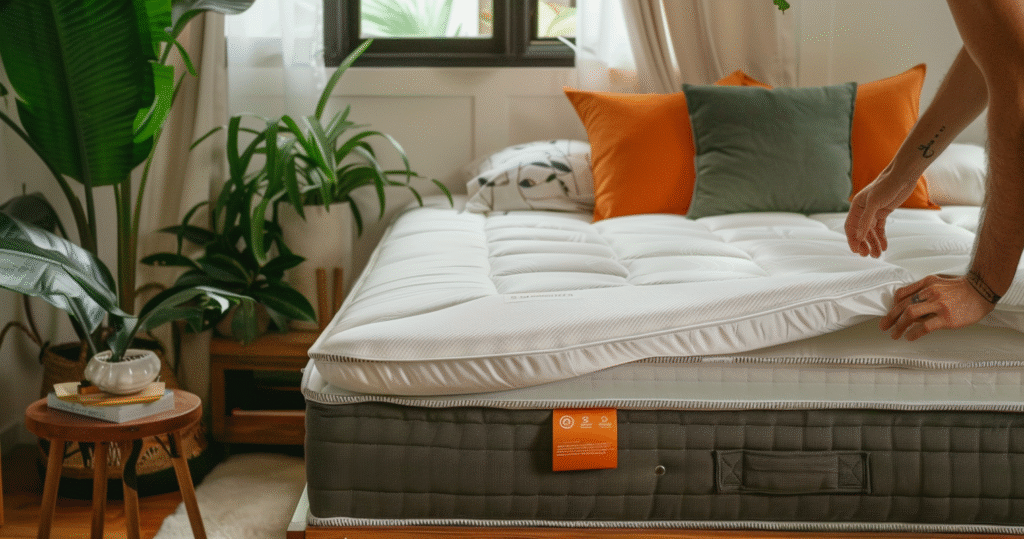
How to Choose the Best Mattress Topper: A 2025 Guide
Transform Your Sleep Experience with the Perfect Topper
Topper Basics: 3 Things to Know
Material is Key
The material determines the feel and function of your topper, from cooling gel foam to supportive latex.
Thickness = Feel
Thicker toppers provide more dramatic cushioning, while thinner ones offer subtle comfort adjustments.
Your Sleep Style Matters Most
Your primary sleep position is the #1 factor in choosing the right firmness and support level.
Step 1: Diagnose Your Mattress Problem
Before choosing a topper, identify what’s wrong with your current sleep surface. Here are the most common issues:
My mattress is too firm
You wake up with pressure points, especially on hips and shoulders. A soft memory foam or plush down topper can help.
My mattress is too soft
You sink in too much and feel unsupported. A firmer latex or high-density foam topper provides extra support.
I sleep hot
You wake up sweaty or overheated. Look for cooling gel-infused foam, latex, or breathable materials.
My dorm mattress is unbearable
College mattresses are notoriously uncomfortable. Any quality topper will dramatically improve your sleep.
Trying to Fix a Dorm Bed?
We know how bad they can be. After testing the most popular options, we’ve identified the clear winners for comfort, durability, and value.
See Our Guide to the 8 Best Mattress Toppers for Dorm BedsFind Your Perfect Topper
Interactive Topper Finder Quiz
Answer these questions to get a personalized recommendation:
What’s your primary sleep complaint?
What’s your primary sleep position?
What’s your budget range?
Your Recommended Topper Type:
Step 2: Understand the Materials (The Most Important Choice)
The material of your mattress topper determines everything from comfort to temperature regulation. Here’s what you need to know about each type:
| Material | Best For | Pros | Cons | Price Range |
|---|---|---|---|---|
| Memory Foam | Pressure relief, side sleepers | Excellent pressure relief, motion isolation | Can sleep hot, slow response | $50-200 |
| Latex | Hot sleepers, back support | Cooling, responsive, durable | More expensive, firmer feel | $100-400 |
| Down Alternative | Soft comfort, budget-friendly | Soft, affordable, hypoallergenic | Less support, may flatten over time | $30-150 |
| Wool | Temperature regulation | Natural, temperature neutral | Limited pressure relief, higher cost | $80-300 |
Memory Foam
Memory foam is the most popular topper material because it excels at pressure relief. It contours to your body shape, which is especially helpful for side sleepers who need cushioning for hips and shoulders. Modern memory foam often includes cooling features like gel infusions or open-cell construction to address heat retention issues. For students dealing with firm dorm mattresses, memory foam provides excellent comfort improvement. Look for CertiPUR-US certified foam to avoid harmful chemicals and off-gassing (the release of chemical odors from new foam).
Latex
Latex toppers offer a unique combination of support and comfort. Unlike memory foam, latex has a more responsive feel—it bounces back quickly when you move. This makes it ideal for combination sleepers who change positions frequently. Latex also sleeps cooler than traditional memory foam due to its natural breathability. There are two main types: natural latex (more expensive but eco-friendly) and synthetic latex (more affordable). Both provide excellent durability, often lasting 5-8 years compared to 3-5 years for memory foam.
Down & Down Alternative
Down alternative toppers provide a plush, hotel-like feel at an affordable price. They’re filled with synthetic fibers that mimic the softness of real down without allergen concerns. These toppers are best for people who want to add softness without changing the support characteristics of their mattress. They’re also the easiest to care for—most are machine washable. However, they don’t provide the targeted pressure relief of foam or the support of latex, making them better for minor comfort adjustments rather than fixing major mattress problems.
Wool
Wool toppers are the premium choice for temperature regulation. Wool naturally wicks moisture and regulates body temperature, keeping you cool in summer and warm in winter. It’s also naturally antimicrobial and dust mite resistant. Wool toppers provide moderate cushioning—more than latex but less than memory foam. They’re an excellent choice for hot sleepers who don’t want the potential heat retention of foam. The main drawbacks are higher cost and limited availability compared to synthetic options.
Step 3: Choose the Right Topper Thickness & Firmness
Thickness determines how dramatically your topper will change your mattress feel. Here’s how to choose based on your sleep position and needs:
Thickness Guidelines
- 1-2 inches: Subtle comfort improvement, good for minor adjustments
- 3 inches: The sweet spot for most people—noticeable comfort without losing mattress support
- 4+ inches: Maximum cushioning, essentially changes your mattress feel completely
Sleep Position Considerations
Side Sleepers
Need pressure relief for hips and shoulders. Choose 2-4 inch memory foam or soft latex toppers. Avoid firm materials that create pressure points.
Back Sleepers
Need balanced support and comfort. Medium-firm latex or 2-3 inch memory foam works well. Avoid overly soft toppers that cause back sagging.
Stomach Sleepers
Need firm support to keep hips aligned. Choose thin (1-2 inch) firm latex or high-density foam. Avoid soft, thick toppers that cause back strain.
Research from Harvard Medical School shows that medium-firm sleeping surfaces provide the best balance of comfort and support for most people, especially those with back pain. This applies to mattress toppers as well—avoid extremes unless you have specific needs.
Real Relief: Stories from Better Sleepers (2025)
“My dorm mattress felt like a slab of concrete. A 3-inch memory foam topper made all the difference. I’m finally getting real sleep before my exams. My grades have actually improved since I started sleeping better!”
“I was waking up with terrible hip pain every morning. After getting a latex topper, the pressure points are completely gone. I sleep through the night now and wake up refreshed.”
“Our old mattress was sagging but we couldn’t afford a new one. A quality topper bought us another two years of comfortable sleep. Best $150 we ever spent.”
*Individual results may vary. Testimonials represent individual experiences and not typical results.
Frequently Asked Questions
A mattress topper is thicker (typically 1-4 inches) and designed to change the feel and comfort of your mattress. A mattress pad is thinner (usually less than 1 inch) and primarily protects your mattress from wear, spills, and allergens. Think of a topper as a comfort upgrade and a pad as protection.
A topper can help with minor sagging (less than 1 inch) by providing additional comfort and support on top. However, it won’t fix major structural problems or deep sagging. For significant sagging, you’ll need a new mattress. Toppers are best for improving comfort rather than addressing support issues.
Topper lifespan depends on material and quality. Memory foam toppers typically last 3-5 years, latex can last 5-8 years, and down alternative may need replacement in 2-4 years. Signs it’s time to replace include permanent body impressions, loss of support, or persistent odors that don’t air out.
Cleaning depends on the material. Down alternative toppers are often machine washable (check the care label). Memory foam and latex should only be spot cleaned with mild soap and water—never soak them. Use a removable, washable cover for easier maintenance. Air dry all toppers completely before use to prevent mold and mildew.
For back pain, choose a medium-firm topper that provides support while relieving pressure points. Latex toppers are often ideal because they offer good support with some contouring. Memory foam can work for side sleepers with back pain, but avoid very soft toppers that allow your spine to curve unnaturally. The Sleep Foundation recommends consulting with a healthcare provider for persistent back pain.
Additional Sleep Improvement Tips
While a quality mattress topper can dramatically improve your sleep, it’s just one piece of the puzzle. For comprehensive sleep improvement, consider these factors from the Sleep Foundation’s healthy sleep guidelines:
- Sleep schedule: Go to bed and wake up at the same time every day, even on weekends
- Room environment: Keep your bedroom cool (60-67°F), dark, and quiet
- Evening routine: Avoid screens for 1 hour before bed and create a relaxing pre-sleep ritual
- Daytime habits: Get natural light exposure in the morning and avoid caffeine after 2 PM
For students dealing with stress and sleep issues, proper sleep hygiene is crucial for academic performance. Consider reading our guides on managing college stress and improving focus for additional support.
Ready to Transform Your Sleep?
Investing in the right mattress topper is an investment in your health and well-being. By understanding your unique needs—whether you’re dealing with a firm dorm mattress, pressure points, or temperature issues—you can make an informed choice that leads to better sleep and better days.
Remember: the best topper is the one that addresses your specific sleep challenges while fitting your budget and preferences.
Explore the Top-Rated Toppers for Dorms